The Ultimate Mercedes: Why These Cars are That Extra Bit Special
From the Hammer to the SLS AMG, these five landmark models trace AMG's evolution from an independent tuner to Mercedes-Benz's in-house performance powerhouse.
"The best or nothing" has always been the Mercedes-Benz promise. But the cars that truly live up to it were shaped by a partnership: Mercedes-Benz and AMG. For collectors, these Mercedes-AMG cars are where engineering, motorsport and rarity meet, and they are the reason the three letters on the trunk lid carry so much weight today.
AMG was founded in 1967 by Hans-Werner Aufrecht and Erhard Melcher, two former Daimler-Benz engineers. The name comes from their initials and Grossaspach, Aufrecht's birthplace. In 1971 their 300 SEL 6.8, the "Red Pig," shocked the establishment at the Spa 24 Hours, winning its class and finishing second overall. What started as an independent tuner became Mercedes' performance arm: a cooperation agreement in 1990, majority ownership in 1999, and full ownership in 2005.
Each of the five cars below marks a step in that journey, from outside tuner to in-house engineering powerhouse. Together they make up the rarest and most significant chapter of Mercedes-AMG history.
AMG Hammer: The First Super Sedan (1986)
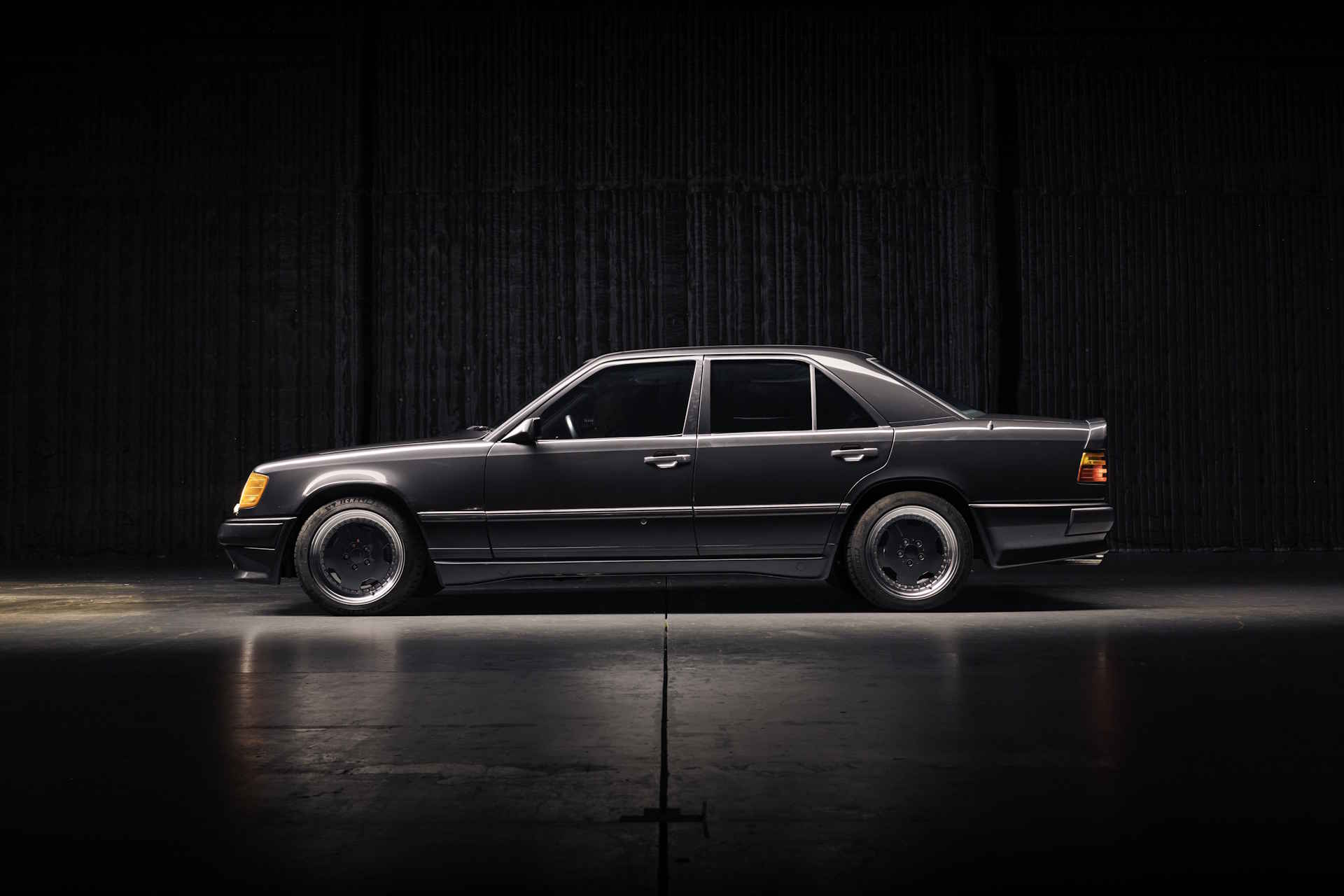
The German Shelby Cobra, and the car that created the super sedan. AMG took the mid-size W124 300E and stuffed in the 5.6-liter M117 V8 from the S-Class, topped with Melcher's own 32-valve DOHC heads. The S-Class automatic, driveshaft, Gleason-Torsen limited-slip differential and a reinforced rear subframe were grafted in, along with custom 17-inch wheels, lower and stiffer suspension, and a wind-tunnel-tested body kit AMG claimed dropped drag to 0.25. Even the battery moved to the trunk to balance the extra weight up front.
Road & Track tested the 6.0-liter U.S. car in August 1987: 365 bhp, 0-60 in 5.3 seconds, the quarter mile in 13.5, and 180+ mph, with AMG clocking a European car at 187 mph on the Autobahn. Turnkey price: $161,422. R&T counted just 13 Hammers in the world at the time, and AMG never published official production figures. A four-door sedan that ran with the Testarossa and Countach, and one you could drive every day.
Why collectors want it: the Hammer is the original pre-merger AMG icon, built before Mercedes had any ownership stake in the company. Each car was built to order, specifications varied from car to car, and documented history matters enormously. Every fast sedan that followed, from the E63 to today's AMG sedans, traces its lineage here.
Curated currently has one of the most significant examples: the AMG 300E 5.6 Hammer, ex-Michele Alboreto.
Mercedes-Benz CLK-GTR: A Race Car With License Plates (1997-1999)
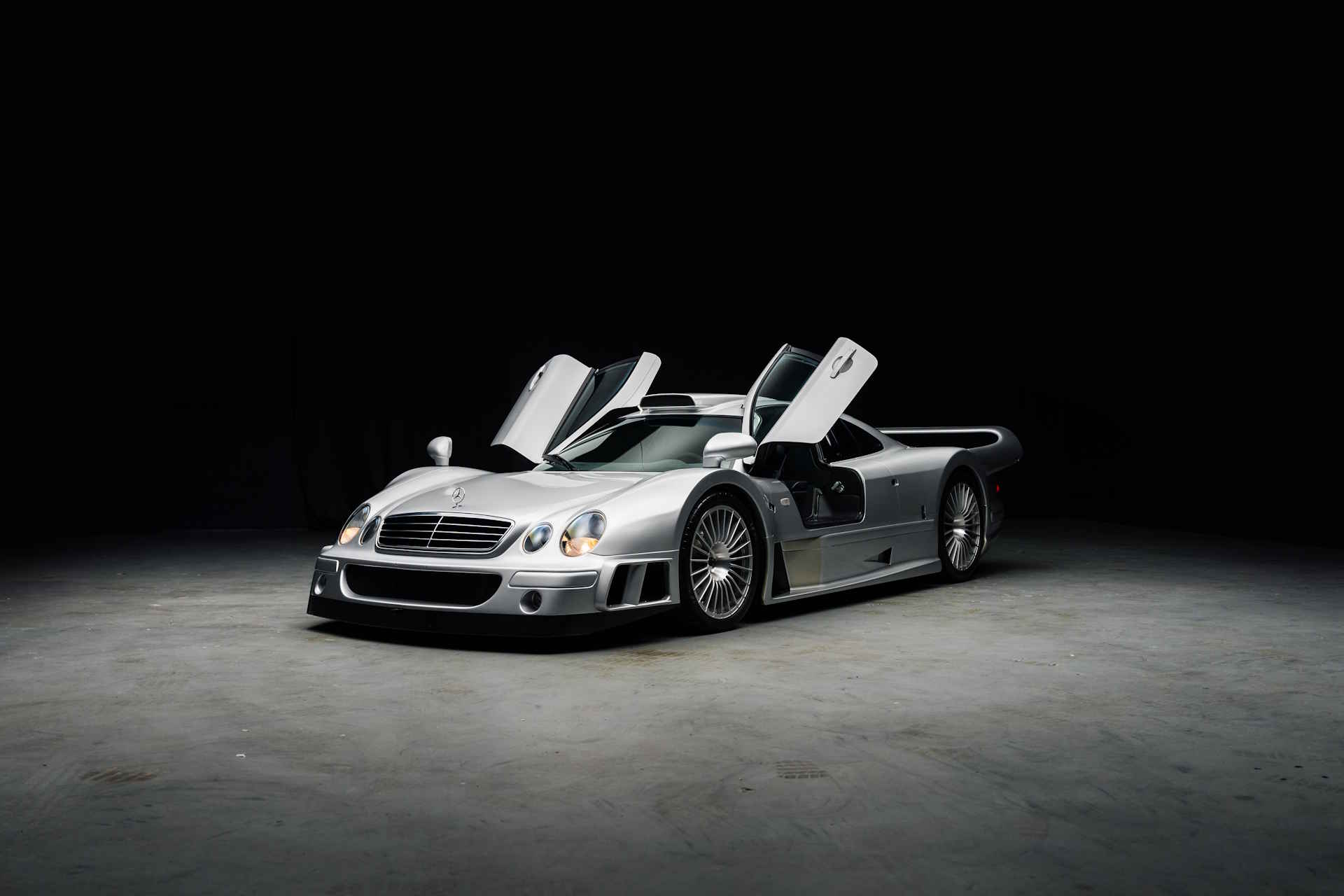
When the FIA GT Championship launched GT1, Mercedes and AMG built the CLK-GTR from scratch in just 128 days. It took pole at its Hockenheim debut, then won 6 of 11 races in 1997 to take both titles, with Bernd Schneider as drivers' champion. In 1998 Mercedes won all 10 races, mostly with the V8 CLK-LM. Mercedes' dominance helped leave the 1999 championship without a GT1 class at all.
Homologation demanded road cars, and just 26 were built: 20 coupes and 6 roadsters, built by AMG and HWA. A race car with license plates, and one of the rarest Mercedes ever sold.
Why collectors want it: it is a direct product of a championship-winning program, and with only 26 road cars in existence, opportunities to buy one are scarce. The CLK-GTR sits alongside the McLaren F1 and Porsche 911 GT1 as one of the defining GT1-era road cars.
Mercedes-Benz SLR McLaren: The Ultimate Grand Tourer (2003-2009)
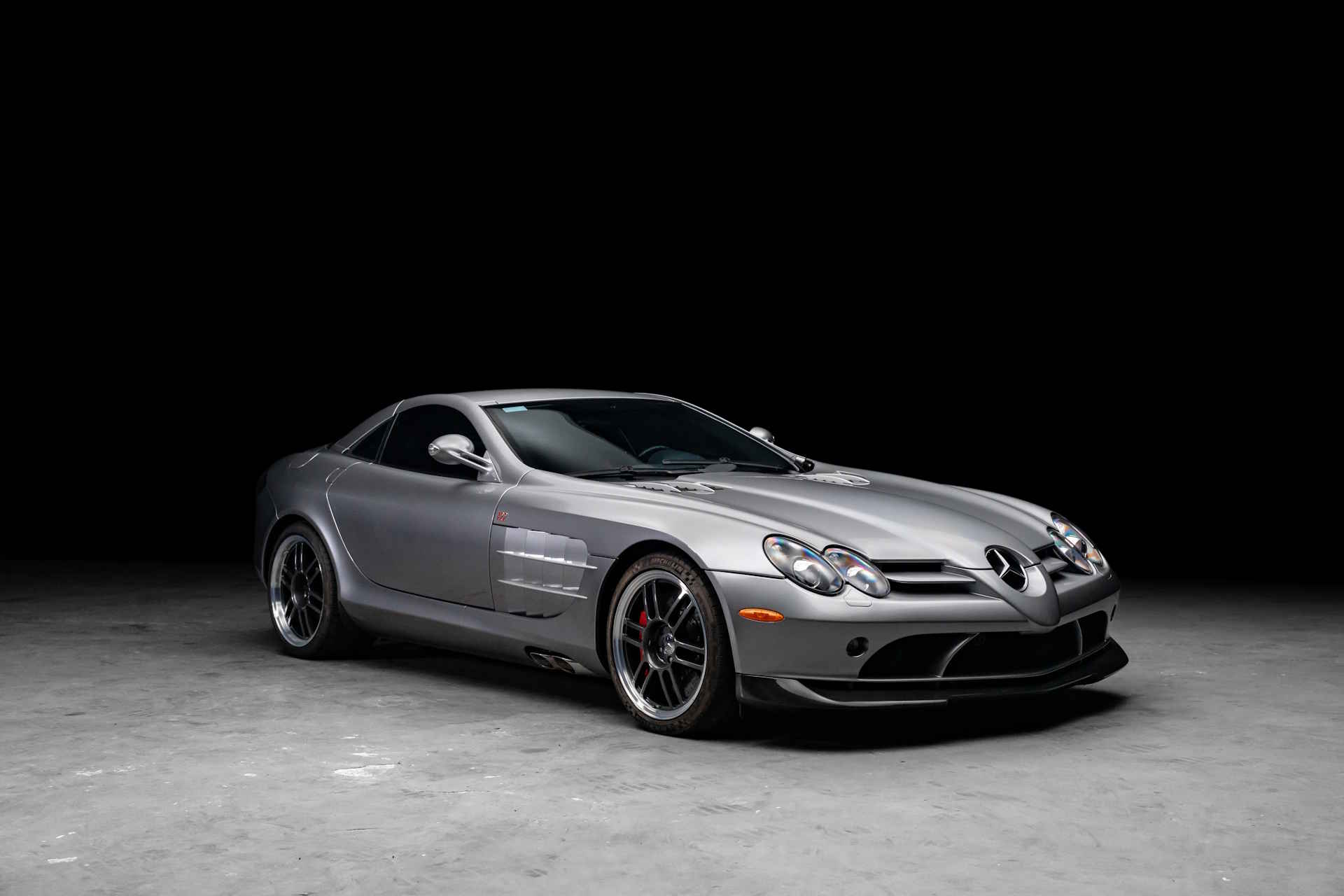
Built with McLaren, with Gordon Murray leading engineering and development while Mercedes handled the styling. Next to the Enzo and Carrera GT it was often written off as soft, but that misses the point. The SLR is the ultimate livable GT: front-engined, supercharged, carbon-bodied, and built to cover continents in comfort. It could still hustle. Klaus Ludwig lapped the Nordschleife in 7:40 in Auto Bild's comparison test against the Carrera GT.
Why collectors want it: the SLR was the flagship of the Mercedes-McLaren era, with a carbon fiber body and chassis developed alongside a Formula 1 partner. Its reputation as the "soft" member of the 2000s hypercar trio is exactly what makes it appealing today: it is the one you can actually drive.
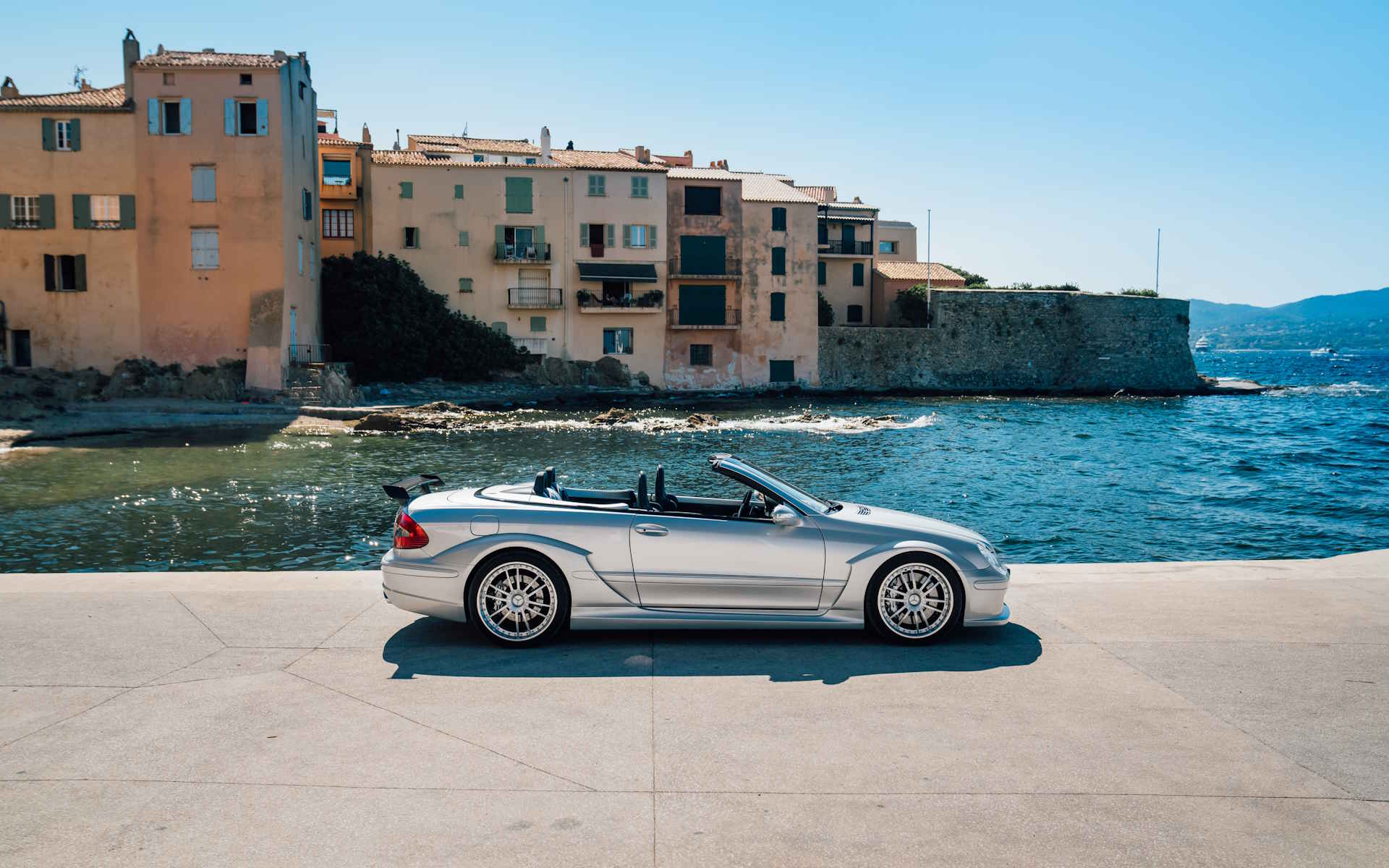
Mercedes-Benz CLK DTM AMG: A Street-Legal Touring Car (2004 & 2006)
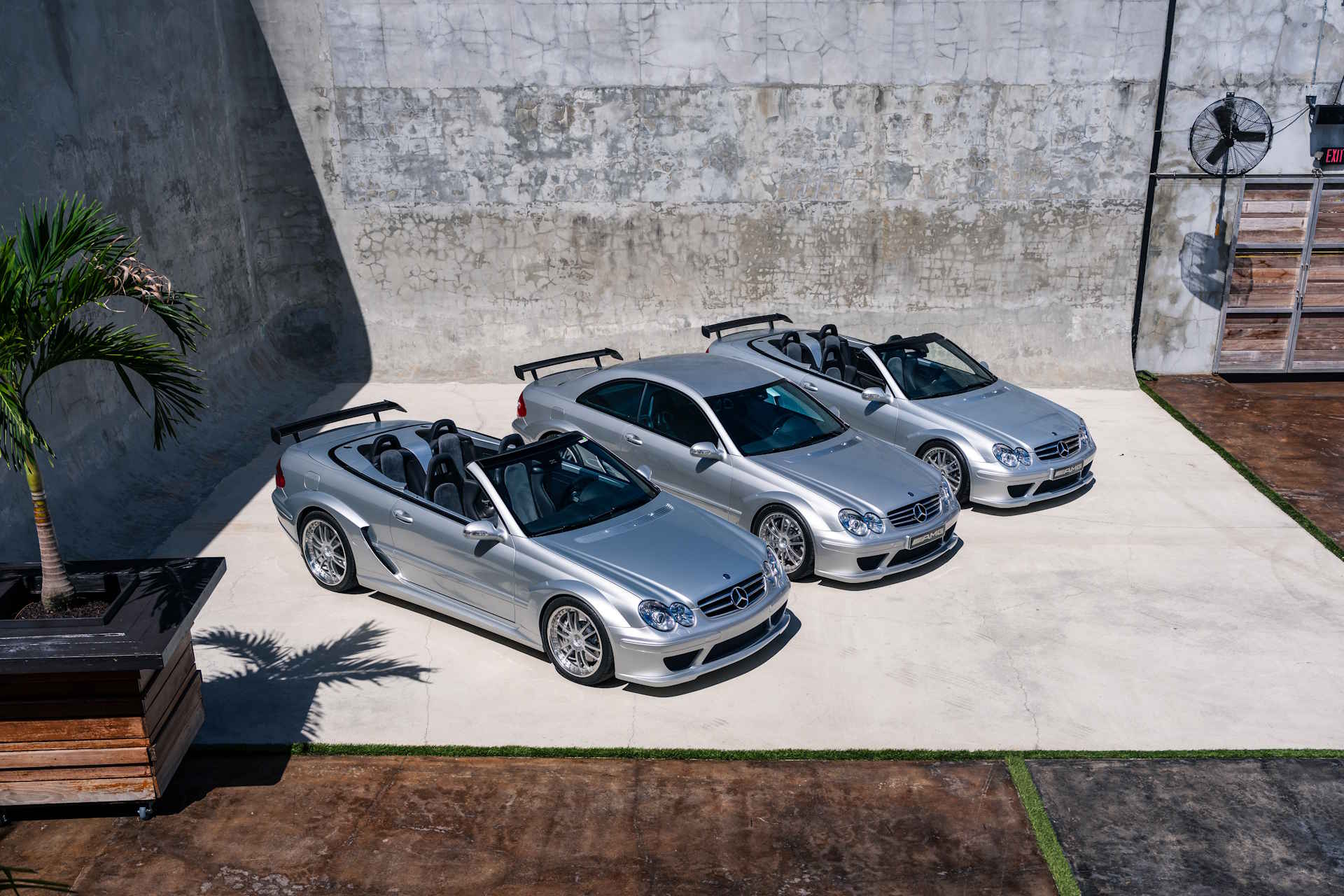
To celebrate Bernd Schneider's 2003 DTM title, Mercedes and HWA built a road car in the image of the race car, powered by the supercharged 5.4-liter M113K V8 making 582 hp. HWA's treatment ran stem to stern: composite body panels, more power, improved cooling, coilover suspension, quicker steering, a freer-flowing exhaust, multi-piece wheels, a locking differential, and functional aero. It felt like a street-legal DTM car. Sport Auto lapped the Nordschleife in 7:54, within two seconds of the SLR's 7:52 in the same magazine's test.
Only 100 coupes were built in 2004. In 2006 came 80 cabriolets, more livable with fixed carbon rear seats where the coupe had cross-bracing, a rear seat delete and racing buckets up front. One of the most extreme convertibles ever made.
Why collectors want it: the CLK DTM is the bridge between the CLK-GTR and the Black Series cars that followed. Its production numbers are small and it is one of the last AMG road cars developed so directly from a touring car program.
Mercedes-Benz SLS AMG: AMG's First Clean-Sheet Car (2010-2014)

The pivotal moment. The SLS was the first car AMG developed entirely in-house, a clean sheet rather than a tuned Mercedes. Mercedes had handed AMG the keys to design a performance car from the ground up, and the gullwing doors tied it straight back to the 300 SL.
Its heart was the dry-sump M159 V8, developed from the M156, AMG's first fully in-house V8, designed by Bernd Ramler, the engineer behind the Porsche Carrera GT's V10. The SLS Black Series took it furthest: the car AMG's engineers always wanted to build.
Why collectors want it: the SLS is where AMG stopped being a tuner and became a manufacturer. It also marks the end of an era as one of the last great naturally aspirated AMG V8s, and the Black Series sits at the top of that story.
The Best or Nothing
From a hand-built super sedan to a ground-up supercar, these five cars trace AMG's rise from a small tuning shop in Grossaspach to Mercedes-Benz's in-house performance brand. Each one earned its place by doing something no Mercedes had done before. That is what makes them the ultimate Mercedes, and why they remain among the most sought-after cars for serious collectors.
Interested in one of these cars, or looking to sell? Browse Curated's current inventory or get in touch with our team.