


Ferrari F430 Scuderia and 16M Spider: Two Modern Icons
Explore why the Ferrari F430 Scuderia and 16M Spider are rising modern collector icons. Naturally aspirated V8, Schumacher input, limited production.
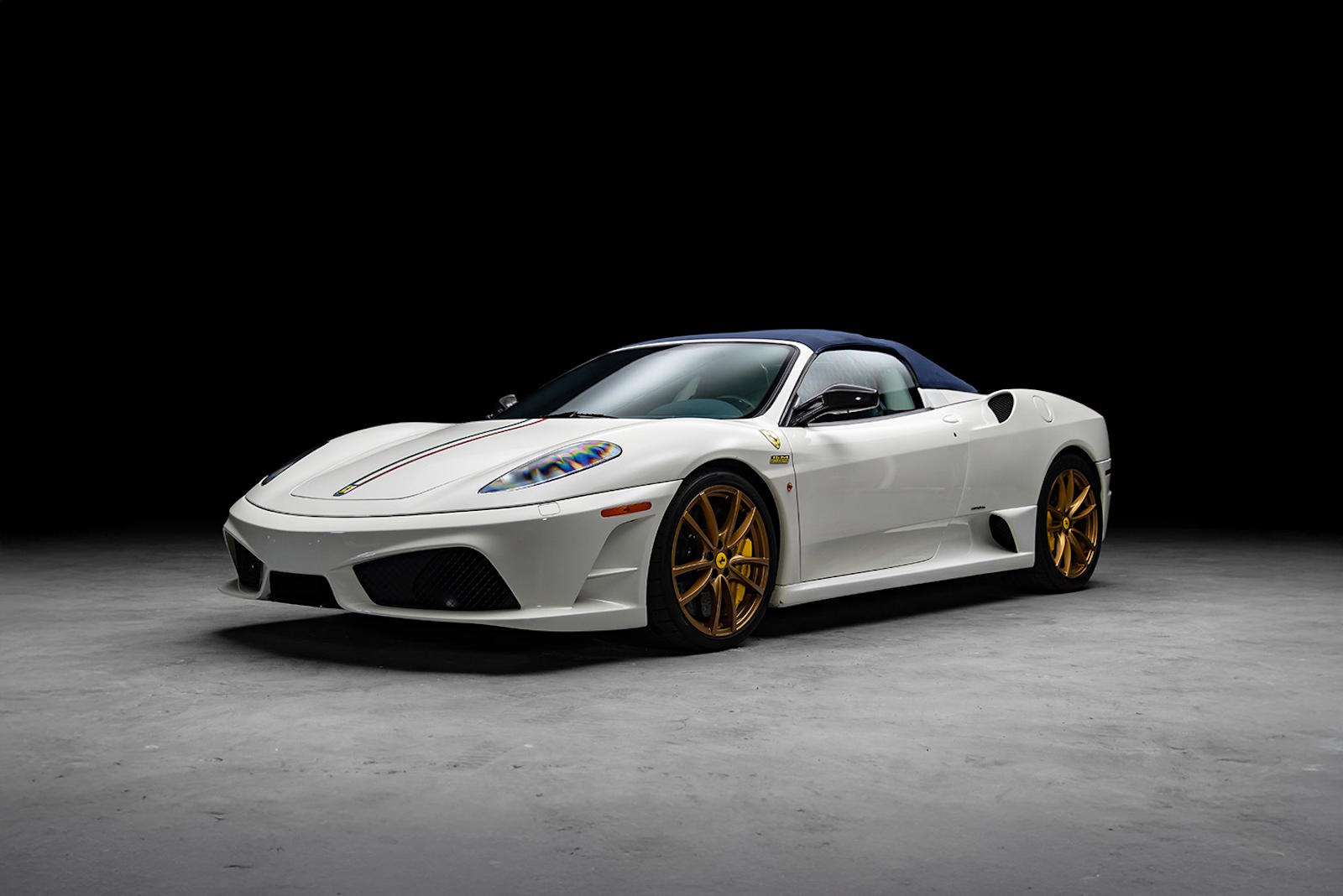
Between 2004 and 2009, the Ferrari F430 established itself as a benchmark mid-engine sports car. But the platform’s true legacy was defined by two focused variants developed with direct Formula 1 input: the Ferrari 430 Scuderia and the limited-production Scuderia Spider 16M.
They represent the last mid-engine V8 Ferraris to combine naturally aspirated power with hydraulic steering feel, a mechanical formula many collectors now consider irreplaceable. As Curated founder John Temerian explains: “These cars are now becoming vintage. They mark the end of an era.” That shift in perception is central to their growing collector status.
Production Numbers and Rarity
While Ferrari produced roughly 14,000 standard F430 coupes and spiders, the Scuderia variants were far more exclusive:
• Ferrari 430 Scuderia: Estimated 1,750–2,000 units
• Ferrari 16M Spider: 499 official units worldwide
Approximately half of the 16M Spider production was allocated to the United States. Limited production alone does not create value. However, limited production combined with generational significance does. The Scuderia and 16M represent Ferrari’s last high-revving, naturally aspirated V8 supercars with hydraulic steering and relatively restrained electronic intervention. That combination cannot be recreated.
What made it possible to build cars like these – and what made them so hard to replicate – comes down to the engineering decisions Ferrari made at every level of the platform.

What Separates the Scuderia from the Standard F430
The transition from F430 to 430 Scuderia was structural, not cosmetic. The key upgrades included:
• 100 kg weight reduction
• 503 horsepower (F136 ED engine)
• 60-millisecond Superfast2 F1 shifts
• Revised aerodynamics with increased downforce
• Carbon-ceramic braking upgrades
• Titanium components and widespread carbon fiber
That 100 kg saving came through a systematic program. Titanium bolts replaced conventional steel fasteners throughout the chassis, the standard glass rear window gave way to a lightweight Lexan panel, and hollow anti-roll bars reduced unsprung mass at both axles. None of it was visible from the outside, but the cumulative effect was felt everywhere.
Michael Schumacher played a direct role in calibrating the dynamics, including the introduction of the “Bumpy Road” damper setting that allowed aggressive powertrain modes without sacrificing compliance. The result was a road-legal car capable of lapping Fiorano nearly as quickly as the Ferrari Enzo.
The 16M Spider retained these mechanical upgrades while adding open-air exposure to the naturally aspirated flat-plane V8, amplifying the acoustic experience that modern turbocharged Ferraris cannot replicate.
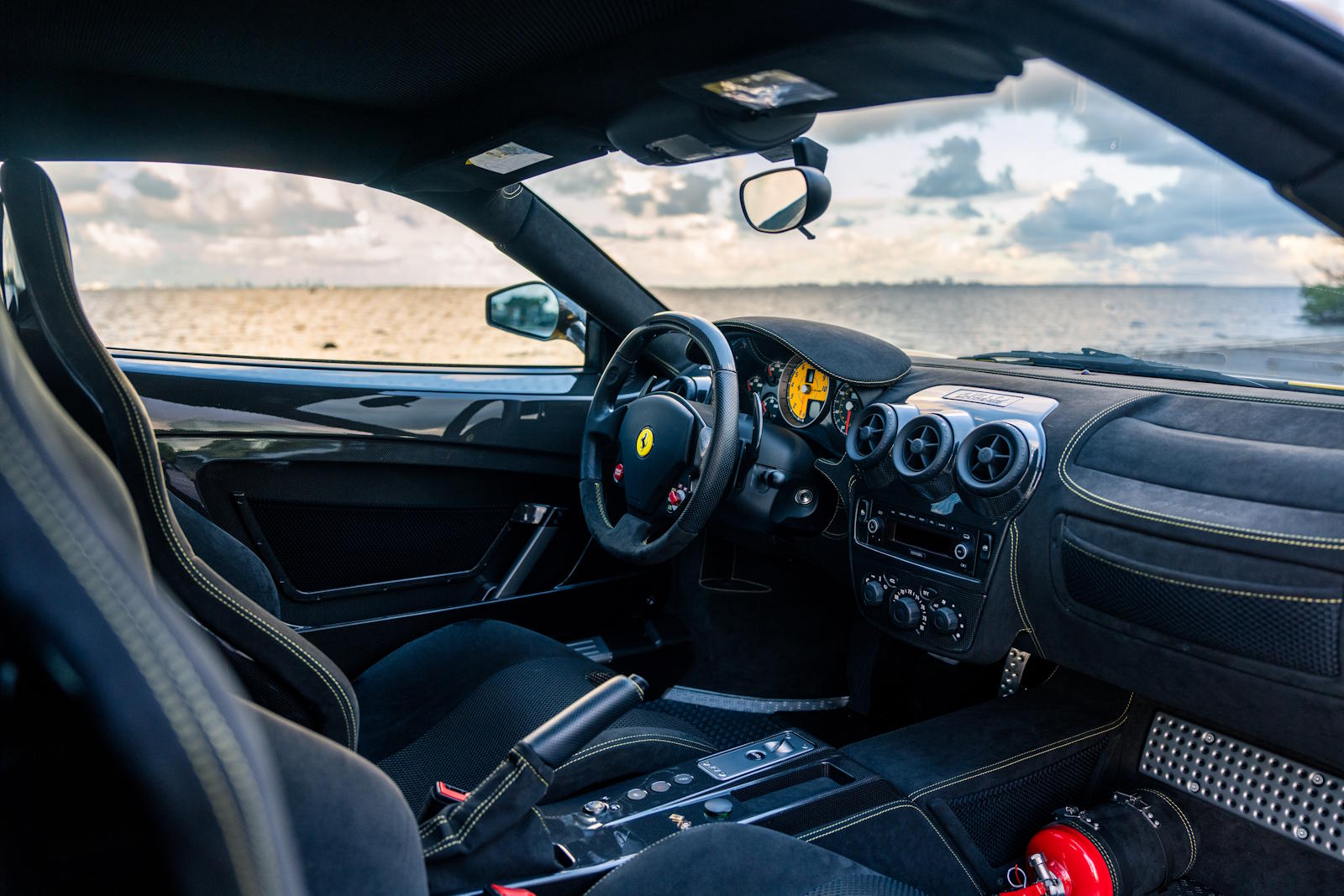
With the roof stowed, the experience shifts further. The flat-plane V8 fills the cabin directly, and the climb toward 8,500 rpm becomes something most drivers describe as genuinely irreplaceable. Owners who have since moved into newer open-top Ferraris frequently mention it as the one thing they miss most.
The Last Naturally Aspirated Ferrari V8s with Hydraulic Steering
What made these cars special was not visible on a specification sheet. It was about the naturally aspirated throttle response, hydraulic steering feedback, an 8,500 rpm redline, and comparatively minimal electronic filtering. Together, they represented a combination that became measurably rarer once Ferrari moved on.
The subsequent 458 Speciale marked the transition to electric steering. The 488 series introduced turbocharging. The F430 Scuderia and 16M Spider sit directly between Ferrari’s analogue era and its digital future. That positioning has become increasingly important in today’s collector market, and the pricing has begun to reflect it.
Market Movement and Collector Focus
The market for the Ferrari F430 Scuderia and 16M Spider has matured. After early depreciation typical of modern supercars, values have stabilized and strengthened. This is evident for low-mileage examples in rare specifications, backed by complete documentation, full service history, and Ferrari Classiche certification.
Color plays a bigger role than many buyers initially expect. Giallo Modena has emerged as one of the most consistently sought-after finishes on the Scuderia, offering the car’s visual intent without the ubiquity of Rosso Corsa.
On the 16M Spider, stripe-delete configurations tend to attract a clear premium from collectors who prefer a cleaner body presentation. John notes: “Specification matters enormously. The right car checks a lot of boxes.”
As these cars move from “used modern Ferrari” into “end-of-era naturally aspirated Ferrari,” the strongest examples are separating from average cars. This pattern mirrors previous Ferrari generational transitions, where the last examples of a mechanical philosophy ultimately carry long-term significance.

Under The Hammer
In the early 2020s, Ferrari F430 Scuderia examples were trading in the low to mid $300,000 range, with exceptional low-mile cars occasionally stretching higher. The 16M Spider, limited to 499 units, generally commanded a premium, often transacting in the $400,000 to $600,000 bracket depending on mileage and specification. At the time, these cars were viewed as desirable modern Ferraris, but not yet fully recognized as transitional icons.
Fast forward to 2026, and the landscape has shifted materially. Recent auction results have seen standout Scuderia examples approach and, in some cases, exceed $1 million, while 16M Spiders have recorded sales ranging from the mid six figures to nearly $2 million for exceptional cars. While not every example reaches those heights, the top of the market has clearly expanded. The gap between average cars and reference-quality examples has widened significantly, reinforcing the importance of mileage, originality, and specification in today’s collector environment.
Why They Matter Now
The Ferrari 430 Scuderia and 16M Spider represent a moment that will not repeat:
• Naturally aspirated V8
• Hydraulic steering
• Limited production
• F1-derived calibration
• Pre-hybrid Ferrari performance philosophy
They sit at the intersection of performance, mechanical purity, and modern usability. As John summarizes: “They’re non-hybrid. They’re still radical. They’re analogue. They’re cool.” For collectors focused on transitional Ferrari icons, that clarity of identity is becoming increasingly important.
About Curated
Curated specializes in historically significant vintage and modern supercars. Since 2015, we have focused on limited-production Ferrari and Lamborghini models, documenting provenance and identifying the strongest collector-grade examples in each generation.
To discuss the Ferrari F430 Scuderia, 16M Spider, or other modern Ferrari icons, contact our team directly.


.webp)
