


Ferrari F Cars, Modern Icons, and a Moment of Recognition
Discover the moment Ferrari F cars and modern icons took center stage at Mecum. Explore why rarity, provenance, and design details elevate these machines beyond performance.
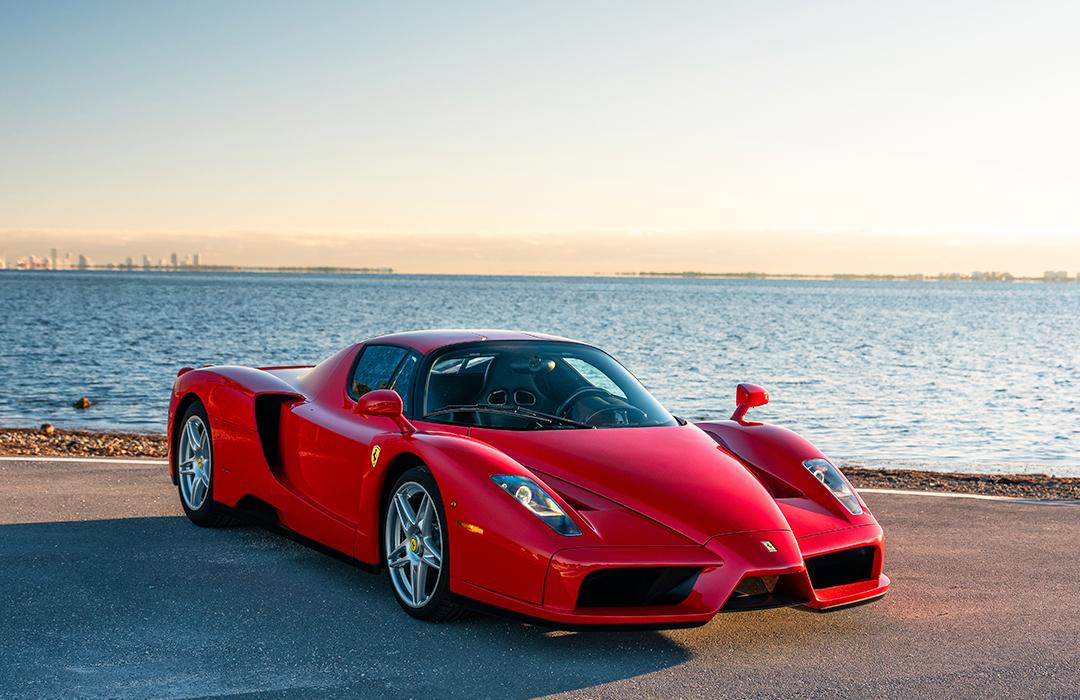
“This weekend felt different,” John Temerian, co-founder of Curated, shared shortly after the auction concluded. “Not because of the noise, but because of what people were able to witness.”
For a brief-moment, the market offered something exceptionally rare, access to true Ferrari mythology. Cars that define the modern Ferrari era, many of which had lived quietly for years, some rarely shown publicly at all. Until you encounter them in person, move from one to the next, and examine the details closely, it’s difficult to fully understand their significance.
“When I say mythology,” John explains, “it’s because so many of these cars haven’t been seen. You don’t realize how important they are until you’re standing in front of them.”
At Curated, proximity has always mattered to us. For more than a decade, our work has been rooted in documentation, research, and long-term conviction. We track specific chassis, record histories, and focus on understanding which examples genuinely stand apart, and why.
“We’ve always been treasure hunting,” John says. “We’re chasing very specific cars, and we have an advantage because we’ve documented most of them. When you look at what’s actually left, especially with cars like the Ferrari Enzo in the U.S., the separation becomes very clear.”
That separation is rarely about a single attribute. It comes from the accumulation of detail. Mileage. Ownership history. Factory specification. One-off elements that, at the time, were virtually unheard of.
“Some of the details we saw,” John notes, “were unparalleled, even by today’s standards. This was years before ‘Tailor Made’. Two sets of factory seats. Signed interior components. Leather-wrapped areas and contrasting finishes you simply didn’t see in the late ’90s or early 2000s.”
When we talk about premiums at the very top of the market, this is why. Across categories, art, watches, design objects, the most complete and significant examples consistently trade at multiples over standard variants.
“It doesn’t matter what it is,” John adds. “The best of the best always trades at a premium. That’s true whether it’s art, sneakers, or cars.”
What stood out to us just as much as the cars themselves was the environment in which they were presented. No competing auctions. No overlapping events. Collectors were present, focused, and engaged.
“That was a big part of it,” John reflects. “You didn’t have five auctions going on at once. People came to be there. And you could feel that.”
Perhaps the most powerful moment, though, had nothing to do with price.
“At Mecum,” John says, “you could be standing next to someone bidding on a $10,000 Corvette, and they had the same reaction, the same passion, as the person bidding $20 million on a Ferrari. That’s what makes cars different.”
That accessibility, the ability to be experienced, shared, and enjoyed across generations, sits at the center of our philosophy. These machines were created by artisans, designers, and engineers whose work deserves recognition not just for performance, but for cultural impact.
“When I started Curated more than ten years ago,” John says, “the conviction was that this generation of cars would one day be recognized as art. And I think that shift is happening now.”
Not art in the distant, untouchable sense, but something deeper. Objects that can be used. Enjoyed. Passed on.
“These cars might even go beyond art,” John adds. “Because they invite people in.”
For us, this moment felt like confirmation. Not of speculation or excess, but of long-held conviction.
We’ll continue to share deeper dives into individual cars, alongside broader perspectives on what this moment means for Ferrari F cars, modern Ferrari icons, and the collector car world at large.
The conversation is just beginning.



.webp)
